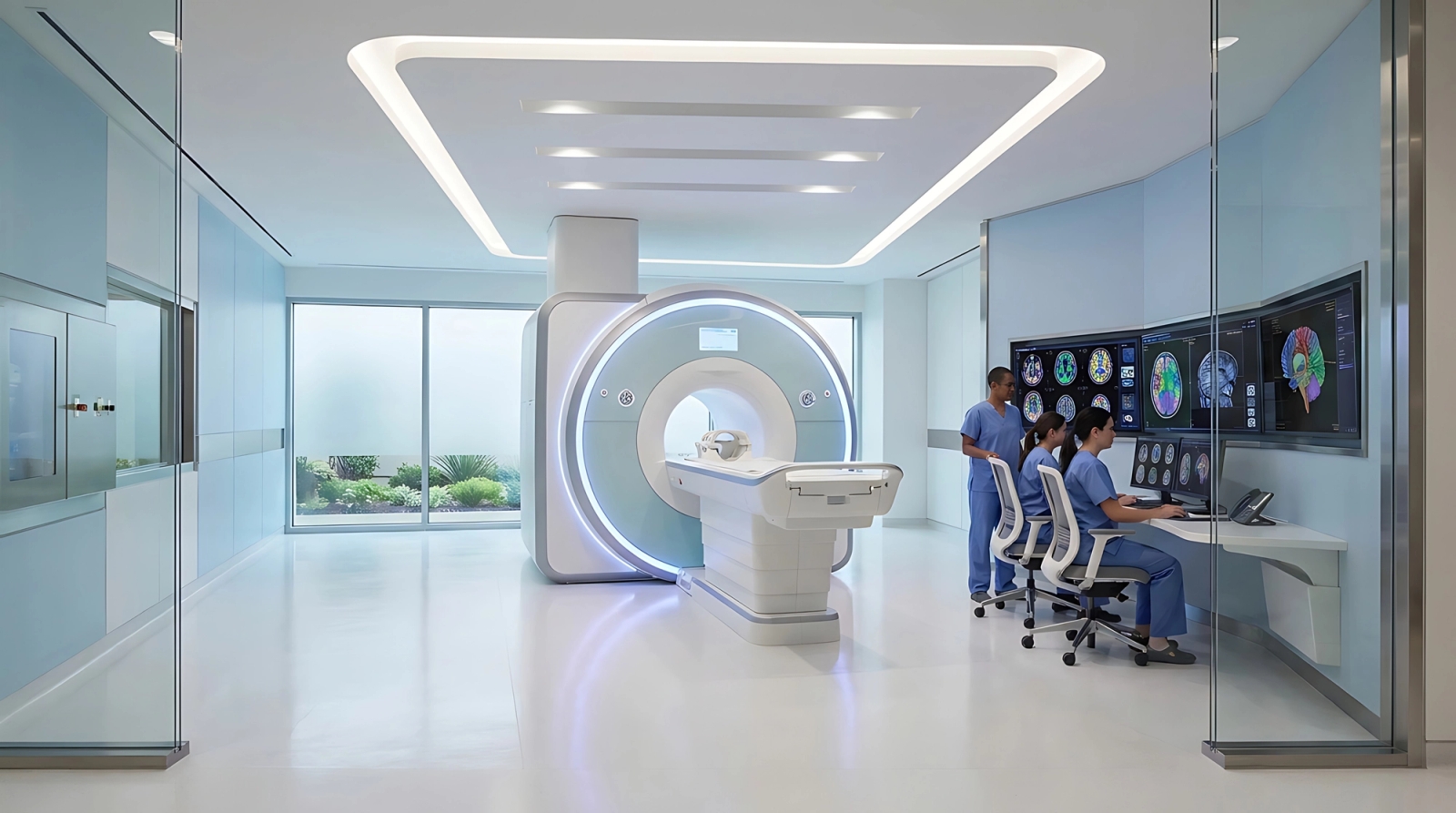
Growing File Sizes Demand Better Fiber Backbones for PACS
Growing File Sizes Demand Better Fiber Backbones for PACS and Medical Imaging
Modern medical imaging generates massive data demands. A single CT or MRI study can take up hundreds of megabytes, with digital mammography files often even larger. Multiply this across radiology, cardiology, pathology, and other hospital departments, all routed through Picture Archiving and Communication Systems (PACS), and accessed simultaneously by radiologists, physicians, and AI tools. The result is a network burden far exceeding that of typical hospital traffic, such as email or EHR records.
This gap between network capacity and imaging needs often underpins radiology workflow issues. This article examines why imaging traffic overwhelms seemingly sufficient networks, the clinical and financial costs of those bottlenecks, and how robust fiber backbones can resolve these challenges while protecting critical investments.
Why "Good Enough" Networks Fall Short
Most hospital networks were built for earlier eras of lighter data loads, text records, and basic applications. But medical imaging creates far greater demands.
Bandwidth needs are growing in two ways: file sizes are increasing, and more departments are contributing to the workload. Imaging now spans cardiology, pathology, and specialty clinics, creating an increasing aggregate workload as workflows digitize.
The result is predictable: general-purpose networks struggle under the high throughput demands of imaging. A network that looks sufficient on paper often feels inadequate in practice.
Why Imaging Traffic Overloads the Network
PACS networks typically operate at gigabit Ethernet speeds or faster at the access layer, which connects individual workstations. However, the real bottleneck lies in the core and backbone, where throughput of 10 Gb/s or more is increasingly essential for handling simultaneous, high-bandwidth imaging workflows.
The backbone, not individual workstations, determines if an entire department can access studies without delays. Imaging traffic strains the backbone because many users access large files simultaneously.
Three trends worsen the issue:
- Higher-resolution imaging generating larger study files
- Enterprise imaging consolidating data from multiple departments into a single PACS
- AI diagnostics adding new users who access high-resolution image sets
These factors, combined, overwhelm backbones not designed for today’s traffic demands.
The Clinical Impact of Slow Imaging Networks
Slow networks create real clinical consequences. Delays in loading studies or accessing prior imaging during consultations disrupt care. In busy departments, even small delays can compound, straining workflows already under pressure.
Key areas where delays matter most:
- Emergency and trauma care: Slow imaging can delay critical decisions.
- Teleradiology: Remote reads rely on fast networks. Bottlenecks cause frustrating delays for radiologists and physicians.
Hospitals spend millions on imaging equipment and PACS software to enable timely, accurate diagnoses. Underinvesting in network infrastructure undermines these investments, turning advanced systems into underperforming assets.
Building a Backbone for Modern Imaging
This is where Superior Essex fiber solutions make a difference. With over 90 years of experience in wire and cable engineering, Superior Essex offers high-performance fiber options specifically designed for demanding imaging workflows.
MicroLite® OM3/OM4 multimode and TeraFlex® fiber cables, along with single-mode distribution and interconnect cables, provide the high-capacity backbones needed for modern hospitals. These solutions support seamless upgrades to 10 Gb/s and beyond, enabling smooth performance across imaging workflows, PACS archives, and workstations.
Key advantages of MicroLite® fiber include:
- High fiber count in small diameters: Supports up to 48 fibers for distribution or 24 fibers in MTP®/MPO-ready interconnects
- Scalable capacity: Extra strands can be activated as demands grow, avoiding costly cable replacements
- Compact design: Fits into tight hospital risers already crowded with infrastructure
This scalability allows hospitals to expand networks incrementally, accommodating new imaging technologies, department growth, or teleradiology partnerships without major disruptions.
Why Compact Fiber Matters in Hospitals
Adding backbone capacity in hospitals is more complicated than in typical buildings. Riser and shaft spaces are often occupied by mechanical systems, medical gas lines, and other critical infrastructure. Large, outdated cables may not fit in these constrained areas. MicroLite® Data Center cables solve this problem with compact designs that maximize capacity without adding bulk.
Disruption is another consideration. Hospital cabling projects must account for active patient care, infection control, and equipment that cannot be powered down. With MicroLite® cables, hospitals can minimize downtime and avoid repeated cable pulls, reducing operational interruptions.
Investing in the Right Backbone
Backbone upgrades are a crucial investment that benefits more than IT teams.
- For radiology and biomedical staff: Faster image loading directly improves workflows and patient care.
- For administrators: Investing in backbone fiber protects larger investments in imaging equipment and PACS software. Even the most advanced systems cannot perform effectively on inadequate networks.
Common mistake: Attempting to save costs by underinvesting in backbone infrastructure. Ironically, the backbone is the least expensive component of the imaging stack but has the greatest impact on performance.
The Bottom Line
Medical imaging files are growing larger, and enterprise imaging continues to expand. A well-designed backbone using OM3/OM4 or single-mode fiber with MicroLite® cables ensures networks can handle increasing demands without bottlenecks. This investment safeguards workflow efficiency and protects the value of multimillion-dollar imaging systems.
Planning a PACS upgrade? Contact your Superior Essex representative to learn more about OM3/OM4 TeraFlex® and single mode MicroLite® fiber solutions for imaging workflows.
At Superior Essex, we build the foundation for reliable connectivity.